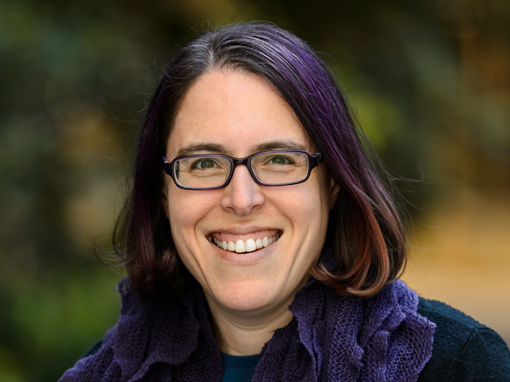
[Speech given at the Melbourne Bisexual Network Annual General Meeting 2022]
I’d like to start with acknowledging the custodians of the lands we’re meeting on. I’m on the lands of the Wurundjeri Woi Wurrung people of the Kulin Nation. I recognise the sovereignty of the First Peoples of this land and their unbroken connection to land, sea, sky and community. I pay my respects to elders past and present.I welcome emerging leaders and any First Nations people with us in the room today. And I commit to working towards Makkarratta and Treaty alongside First Nations peoples.
My name is Rosanne Bersten and I’m a Jewish queer autistic social justice trainer.
No, wait. My name is Phoenix and I’m a kinky autochorissexual poet, writer and activist.
To quote famous bisexual Walt Whitman, I am large, I contain multitudes.
Either way, my pronouns are xe and xyr. Nice to meet you all.
As you’ve just heard, my work involves educating people about the intersecting systems that shape our experiences of ourselves. One of the things we often hear in training is that people feel like they can’t bring their whole selves into a space. But we all do this: fracture ourselves in order to conform. And today I want to talk to you about what it might look like if that wasn’t the case.
Some of you might have heard me talking before about solidarity. But what is solidarity? I like this piece from the Jewish Voice for Peace Haggadah with a nod to Paulo Freire’s Pedagogy of the Oppressed:
Solidarity is hard work. It requires ongoing self-reflection, clear accountability structures, continual learning and critical thinking. Also: humility, empathy, commitment, hope and love. True solidarity unites communities with different levels of oppression and privilege in the common struggle for liberation. It involves community building, support in struggle, awareness of our own relationship to different forms of oppression, and commitment to action that is accountable to those most directly affected by injustice.
But what does that mean in practice? For Uncle William Cooper in 1938, a Yorta Yorta man whose people were in the middle of a genocide of their own, it meant being one of the few people to protest the Nazi treatment of the Jews. He saw what was coming because it was his experience too. And now, that means, for me as a descendant of Jewish refugees, attending the vigil for 15-year-old Cassius Turvey whose life was disgustingly cut short by racist thugs so recently.
How do we do solidarity? What is community if it’s not based on identity?
I’ve been feeling really isolated recently, so in a way, what I’m about to say is as much an exhortation to myself as it is to you.
In the beginning of my 2003 Master thesis on sexuality, ethnicity and disability, I wrote a marginal note, a literal note in the margins. It said:
I am the I that must be silent here. I am the thread that must be invisible but I cannot be silent here. I am expected to erase myself, remove myself, hide myself, unspoken author, modest witness, silent observer. I speak only through the cracks, I whisper through the fractured mirror, I crave, I scream, I act. Weave me into your nightmares. To reveal my frayed, multicoloured, multivalent self is to turn over the cloth, show the underside where the stitching is, reveal the lie of smooth striated space. I am not supposed to tell you I love women and men. I am not supposed to hint at my resonances with matryoska dolls. I am not supposed to remind you about piroski, latkes, bubble n squeak, tang and frozen raspberry ices in the Sydney heat. I am not supposed to mutter to you about tingling limbs, aching backs, memory lapses. I am especially not supposed to talk to you about rope, whips, blindfolds, intensity. Hide, hide. Quiet now.
I think growing up Jewish is an interesting training ground for being bisexual or queer. We could pass as white and there’s pressure to assimilate but there’s also this fierce determination not to do that, because if we do that, Hitler’s won, you know? The Persian king Xerxes the First has won. Antiochus IV has won. Sorry, I’m being a tiny bit flippant, but they tried to annihilate us a lot, you know? Most of our festivals are ‘they tried to kill us, they failed, let’s eat!’
So we are fiercely Jewish in the face of growing right-wing movements, and we don’t hide.
I came out as bi when I was 15. I’d kissed the girl I had a crush on in a tent on a school excursion to see Halley’s comet. It’s absolutely bizarre to me that it was 35 years ago. I told my mother pretty much immediately and she asked me whether kissing Justine was any different from kissing James. I thought about it. Nope.
But it never occurred to me to hide who I was. Kids at school would say, ‘bye!’ on parting and I would cheerfully call back, ‘hetero!’ and then say, ‘What? I thought we were naming each other’s sexualities!’ It became a wonderful, long-running joke.
When I introduced my mother to Georgia, many years later, my mother was thrilled I’d met a nice Jewish girl. When I had a child with a blond American guy, my mother was more concerned to make sure that I was going to raise the kid Jewish than the fact my partner was bisexual too. I’ve been lucky, but it’s not all roses: my kid’s trans nonbinary identity has had some pushback in the family.
So when I finally worked out that there was some sort of pressure to let any relationship I had subsume me into either a heterosexual or gay identity, I rightly saw it as the same kind of pressure to assimilate that we got as Jews.
Our oppressors see the connections between us too.
In 1996, I was involved in crafting the memorial in Sydney for queer and gender-diverse people killed in the Holocaust and through violence since. It’s an amazing art work: a pink triangle with the faces of concentration camp inmates as a transparent white overlay and black poles forming another triangle, so that from above, it looks like a Star of David. I knew what I wrote had to encompass all of us. I wrote:
We remember you who have suffered or died at the hands of others, women who have loved women; men who have loved men; and all those who have refused the gender roles others have expected us to play. Nothing shall purge your death from our memories.
There are many stories of solidarity to come out of our past.
But what of our present? Stigma and the pressure to assimilate exists everywhere. It’s a form of collective gaslighting, lying to us about what will happen if we step out proudly into the light of community, connection and love.And sometimes, if a person is alone, the lie is true: people lose jobs, or housing, or safety. But what if they’re not alone? What if there are enough of us to catch them?
This is my call to you all now. To create spaces that are broad enough, permeable enough, flexible enough to welcome all of us in our crystalline, prismatic difference.
First: be proud, be who you are, dance, sing, celebrate your sexuality, your culture, your body, your ability. Yes, coming out over and over and over is tedious but in the end, it’s affirming and an act of defiance in itself.
And second: look to see who else you can lift up as you go. Who’s struggling? How can you help? Sometimes we need to leave our communities to be safe — our communities of faith can be homophobic, biphobic, transphobic, our queer communities can be racist. But once you’re safe, reach back.
As I also said in my Masters thesis in 2003:
A rewritten Jewish practice is only possible, ironically, with an immersion and understanding of traditional Jewish practice, which excludes so many of us who feel unwanted or unnecessary as women and queers… By leaving the Jewish community, we failed to transform it. By leaving the Gay and Lesbian community, we failed to transform it. These resonances I now find moving within and between alternative queer, alternative Jewish and the various intersections of these allow for liens between these spaces, allow for these spaces to expand to be transformed until they are seamless. Not merged seamlessly, not to say at all that they are somehow now identical, but rather than it should be impossible to determine at which point one has begun and another ended.
And if you can’t reach back, if that’s too painful, pay it forward: reach across. Recognise the commonalities of your experience with the experience of First Nations folks, disabled folks, survivors of trauma — the other people in the room. What does it look like if we reject the entire concept of assimilation or even integration into the majority? What if we overthrow it, putting in its place a rhizomatic network of autonomous collectivities?
In 2004 Nik Beuret, now an academic at the University of Essex as far as I can tell, but when I knew him a radical Melbourne anarchist, wrote,
“The trick is to navigate the relations in a way that sets up identities that are open to mutation, and collectivities/communities that are stable yet promote change and possibility and departure”.
Liminal subjects — that’s us, the queers, the bisexuals, the transgender peeps, the enbies, multiracial and multicultural, the intersectional, all of us in-betweeners — may move through a variety of strategies to negotiate comfort spaces while oppressive systems continue to demand conformity, but the strategic alliances we create, the radical networks of resistance, open up potential escape routes that may eventually render ‘safe space’ unnecessary, moving beyond the limits and into a kaleidoscope of ourselves. It’s time to create the world we want to live in — one of respect, community, mutual aid and collective joy.
Thank you.