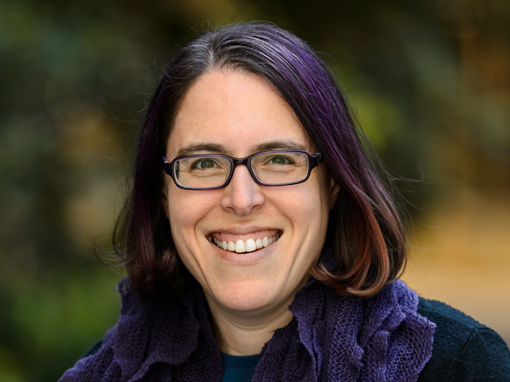
My cousin Difa is exactly what you’d imagine a small Jewish grandmotherly type to be. She’s half my height and round as can be. When I arrive, she has pastry ready filled with sweet cheese and apricot jam, ready to put in the oven. Her hands are covered in flour. With absolute precision and a heavy Russian accent, she says, “If you wait half an hour, it will be pie.” She’s not a grandmother, though. She never married. She’s 82. She’s still working, as a plant physiologist, specialising in the respiration of plants and how they process CO2. She’s still publishing. She used to be the head of the Institute, now they come to her at home for consultation. She tells stories of going to Germany for conferences. She tells stories about everything. She makes amazing borscht.
I ask Difa about where my grandfather grew up, what does she remember? I never met him: he died before I was born. None of the people I’m talking with ever met him: they were born after he left the country. Apparently, Lusya, his sister, took my Dad and Uncle Norman there when they first visited, showed them the street I’ll be trying to find tomorrow, showed them the house. But Lusya’s dead now. Difa can’t remember the house number now, and neither can Dad, so I’ll just be walking down the street. Apparently, later, after Misha left, they lived near the Botanic Gardens and my great-grandfather loved walking in the gardens. That makes me happy. I can walk in the gardens and know that he walked there too. But that’s not my grandfather, that’s *his* father.
I ask Difa if she has any photos from before he left. We spend the morning looking at photos she had of her family without him, photos my father had brought to her of him in Australia after he left. There seems to be no trace of him before he left, no proof he was ever here.
What is this thing I’m looking for? Family? History? Roots? This is in some ways the foundation of my thesis work. What is this thing, belonging? What is this thing, ethnicity? Why is this more meaningful to me than where my grandmother came from? Her Dutch roots are much further back. The family had been in Australia six generations.
We run out of photos and talk instead, about travelling, about politics, about feminism in Russia, the difficulties of being a woman scientist. She makes lunch: caviar and bread, rich red borscht (traditional dish from the Ukraine, she says, made from red cabbage and beetroot and sweetened with berries and sugar, served with sour cream), cucumber and tomato salad, honeydew melon for dessert.
She insists I take traditional treatments for my runny nose: first inhaling water with a few drops of iodine and soda, spitting it out my mouth (ugh) then rubbing a mix of honey and fresh aloe vera into the nostrils. Interesting.
She wants me to see some of Moscow, persuades me to leave my bags and head to Red Square. I do. It’s a lovely sunny day. Bizarrely, the centre of Red Square is a hive of activity as roadies set up enormous scaffolding for some insanely huge rock concert.
I see St Basil’s crazy church, check out the State History Museum (love the building) and head back to Difa’s. I buy her flowers and dill pickles for dinner. She (bless her cotton socks) has prepared a travel pack for me: breakfast for tomorrow and everything. Dinner is hot potato fried Russian style, sardines, more caviar, dill pickles, bread. She packs me off to the train.
My first encounter with a Ukrainian is someone who speaks spotless English and helps me find my carriage. My second is the sweet lawyer sitting opposite me who speaks hardly any English but a little German and we are using my language guide to exchange basic information. His name is Valery. And now he’s just helped me compile a list of essential words in Ukrainian using my poor Russian and hand signals. This all bodes very very well.